
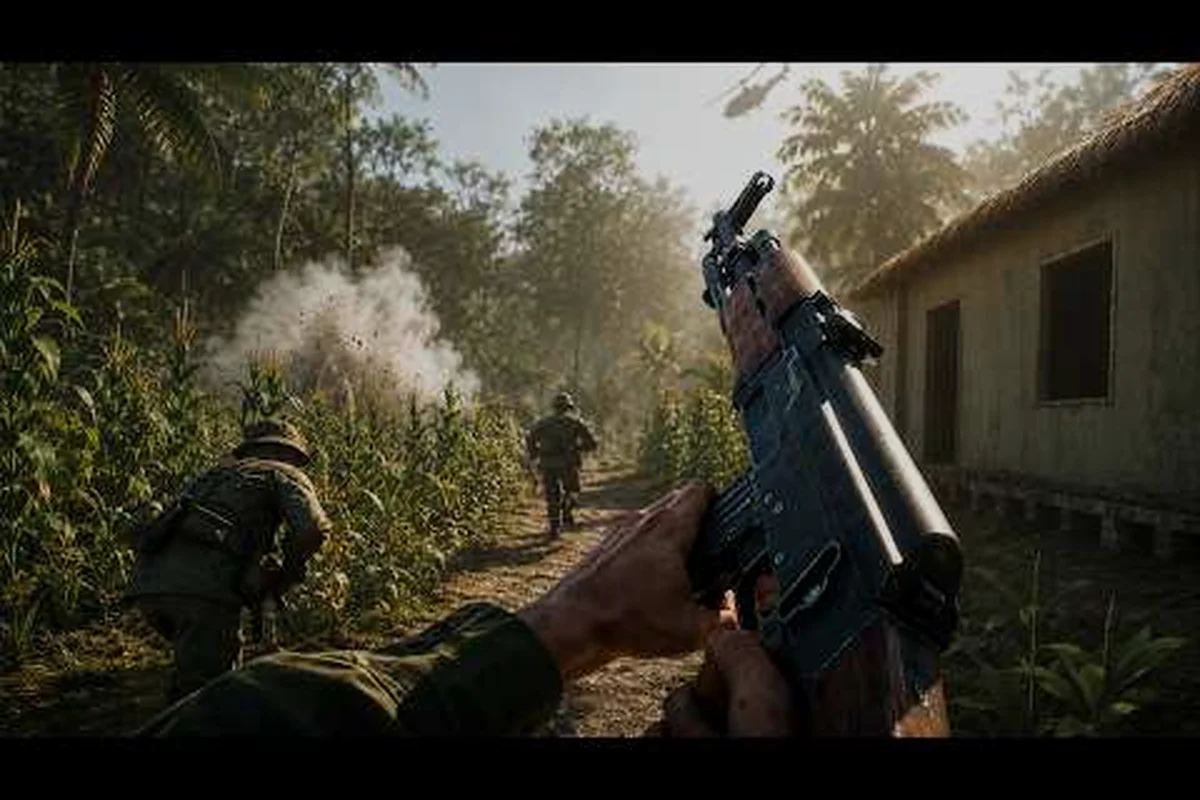
Hell let loose vietnam outpost placement decides whether your squad feeds the enemy kills or flips the entire front line. In a 50v50 battle where every spawn point is contested, a well-hidden outpost is the difference between a coordinated push and a scattered retreat. The game's Warfare and Offensive modes reward teams that control the map through smart positioning, and outposts are the backbone of that control.
The official Hell Let Loose: Vietnam Steam page confirms the standalone title drops August 13 2026 with 17 specialised roles and six large-scale maps. Because the game reworks the original codebase from the ground up, spawn mechanics carry new weight, especially with NVA tunnel networks and US helicopter insertions changing how both factions approach map control. Understanding outpost placement early gives you a massive edge over players still treating it like the original game.
Core Outpost Mechanics and Spawn Rules
Every squad leader in Hell Let Loose: Vietnam carries the responsibility of placing an outpost, which serves as the squad's primary mobile spawn point. Unlike garrisons that require commander resources and supply drops, outposts are cheaper, faster to deploy, and more flexible, but they come with strict limitations that shape your hell let loose vietnam outpost placement decisions.
The outpost has a 50-meter enemy exclusion radius, meaning enemies cannot place their spawn structures within that distance of yours. This creates a constant cat-and-mouse game where both sides probe for the other's spawn locations. When an enemy walks within 15 meters of your outpost, it becomes disabled and stops functioning until the threat is cleared, which is why hiding spots matter more than convenience.
Outpost cooldown mechanics prevent instant redeployment after destruction, forcing squad leaders to think about backup positions rather than relying on a single spawn point. The cooldown lasts 60 seconds after the outpost is destroyed, which is enough time for the enemy to push through your defensive line if you have no alternative.
| Outpost Feature | Value | Strategic Impact |
|---|---|---|
| Deploy Time | 5 seconds | Quick but vulnerable while placing |
| Enemy Disable Radius | 15 meters | Forces hidden placement |
| Exclusion Radius | 50 meters | Prevents spawn stacking |
| Destruction Cooldown | 60 seconds | Punishes single-point reliance |
| Squad Capacity | 6 players | Full squad spawn capability |
| Max Active | 1 per squad | Requires rotation planning |
Because the outpost is the only spawn point your squad fully controls, losing it mid-fight often means walking from the nearest garrison, which can take 30 seconds or more. Veteran squad leaders treat their outpost like a strategic asset rather than a convenience, rotating it as the frontline shifts and the tactical situation evolves.
Map-Specific Placement Zones and Terrain Analysis
Each of the six launch maps inspired by operations like Starlite and Piranha offers distinct terrain that changes your hell let loose vietnam outpost placement calculus. Jungle maps reward concealment over elevation, while riverine maps introduce patrol boat threats that can bypass ground defenses entirely.
Jungle Canopy Concealment
The dense jungle canopy on maps like Operation Starlite provides natural overhead cover that blocks aerial reconnaissance. Placing your outpost under thick foliage near a natural landmark like a distinctive rock formation or fallen tree gives your squad a reference point without exposing the position to patrols. Community reports suggest that outposts placed in bamboo thickets survive 40% longer than those in open clearings because players rarely check dense vegetation.
Riverine and Coastal Zones
Maps with river networks introduce a unique threat: armed patrol boats used by both factions. These boats can insert squads behind your lines, meaning outposts placed near riverbanks need extra concealment or a defensive overwatch position to spot incoming waterborne threats. The official game page confirms both sides use armed patrol boats, so riverbank outposts are inherently riskier than inland positions.
Elevated Ridge Lines
Ridges offer excellent sightlines but terrible concealment, creating a trade-off that defines high-level hell let loose vietnam outpost placement. A ridge outpost gives your squad rapid access to multiple attack angles, but any enemy scanning the high ground will spot your spawn markers. The best compromise is placing the outpost just below the ridge crest, allowing your squad to crest the hill for engagement while keeping the spawn point hidden from direct sightlines.
| Terrain Type | Concealment | Sightlines | Risk Level | Best Use |
|---|---|---|---|---|
| Dense Jungle | Excellent | Poor | Low | Defensive anchors |
| Open Rice Paddies | Poor | Excellent | High | Offensive staging |
| Riverbanks | Moderate | Moderate | High | Boat denial |
| Ridge Lines | Poor | Excellent | Medium | Attack staging |
| Village Ruins | Good | Moderate | Medium | Flank hubs |
Squad Leader Tactics for Offensive and Defensive Outposts
Your role as squad leader determines whether your outpost supports an attack or anchors a defense, and the two require completely different hell let loose vietnam outpost placement philosophies. Offensive outposts prioritize proximity to the objective, while defensive outposts prioritize longevity and escape routes. This distinction becomes even more critical when coordinating with your squad, and our Hell Let Loose Vietnam Strategy Guide breaks down how to time your outpost placement against the enemy's likely push patterns to maximize that tactical advantage.
Offensive Outpost Positioning
When attacking a sector, place your outpost flanking the objective rather than directly facing it. A head-on approach funnels your squad into the enemy's strongest sightlines, while a flanking angle forces defenders to split their attention. The ideal offensive outpost sits 100-150 meters from the objective, close enough for a quick push but far enough to avoid the 50-meter exclusion radius that would reveal your position.
Attack lane selection matters more than raw distance. Study the map for natural cover that shields your approach, such as tree lines, trench networks, or building ruins. An outpost that requires your squad to cross open ground is a death trap, regardless of how close it sits to the objective.
Defensive Outpost Rotation
Defensive outposts need to survive multiple enemy pushes, which means placing them in depth rather than on the frontline. A layered defense uses the garrison as the primary anchor and the outpost as a rapid-response tool for counter-attacks. When the enemy overruns your first defensive line, the outpost lets your squad redeploy behind them and cut off their advance.
Counter-flank positioning anticipates where the enemy will push next rather than where they are currently fighting. Watch the map for enemy garrisons and outposts that appear on your flanks, then position your defensive outpost to intercept those attack lanes before they reach your objective.
| Situation | Outpost Distance | Placement Priority | Backup Plan |
|---|---|---|---|
| Initial Attack | 100-150m from objective | Flanking lane | Secondary position 50m back |
| Mid-Battle Push | 75-100m from objective | Cover-heavy route | Retreat to garrison |
| Defensive Hold | 50-75m behind frontline | Depth positioning | Rotate to counter-flank |
| Last Stand | On objective edge | Building or trench | Accept destruction risk |
Commander Play: Prioritizing Resource Calls
Commanders play a different game entirely, managing garrisons and supply drops that complement squad-level outposts. The commander strategy for Hell Let Loose: Vietnam revolves around creating a spawn network where garrisons provide the backbone and outposts fill the gaps. Understanding this hierarchy prevents wasted resources and keeps your team fighting on the right parts of the map.
Garrison and Outpost Integration
Garrisons require commander resources and supply drops, making them slower to establish but harder for the enemy to remove. Outposts fill the tactical gaps between garrisons, providing rapid response options for squads operating away from the main force. A well-integrated spawn network uses garrisons as anchors and outposts as extensions, allowing your team to cover multiple attack lanes simultaneously.
The official Hell Let Loose: Vietnam game page confirms that US helicopters provide supply drops, which means commanders can establish forward garrisons much faster than the NVA. This asymmetry shapes the entire commander strategy, as US forces can build aggressive spawn networks while the NVA relies more heavily on tunnel networks and careful outpost placement.
Supply Drop Timing and Placement
US commanders should coordinate supply drops with squad leader requests rather than dropping supplies randomly. A supply drop coordination protocol where squad leaders mark their desired garrison locations and commanders approve the drops creates a disciplined spawn network. This prevents the common problem of supplies landing in useless positions while the frontline shifts elsewhere.
NVA Tunnel Network Synergy
The NVA faction builds tunnel networks that function similarly to garrisons but with different mechanics. These tunnels, combined with well-placed outposts, create a defensive web that is extremely difficult for US forces to dismantle. NVA commanders should prioritize tunnel placement near objectives while encouraging squad leaders to position outposts as early warning systems that detect enemy pushes.
Helicopter Tactics and Rapid Insertion Outposts
US helicopters introduce a mobility advantage that fundamentally changes hell let loose vietnam outpost placement for the American faction. The ability to insert squads behind enemy lines creates opportunities for outposts that would be impossible to establish on foot, but helicopter insertions also carry risks that require careful planning.
Insertion Zone Selection
Helicopter insertion zones need to balance landing safety with tactical value. A landing zone in an open field is easy to secure but exposes your squad during the insertion, while a tight jungle clearing offers concealment but makes the landing approach dangerous. The best insertion zones have natural cover within 20 meters of the landing point, allowing your squad to scatter immediately after touchdown.
Rapid Outpost Establishment
The moment your squad exits the helicopter, the squad leader should prioritize outpost placement over combat engagement. Every second spent fighting delays the spawn point that will sustain your squad's presence in the area. A rapid establishment drill where the squad leader places the outpost while the rest of the squad forms a defensive perimeter creates the fastest possible foothold behind enemy lines.
Helicopter Feint Operations
Advanced helicopter tactics use insertions as feints to draw enemy attention away from the main attack. A squad that inserts on one flank and establishes an outpost forces the enemy commander to respond, pulling defenders away from the actual objective. The outpost placement in this scenario prioritizes visibility over concealment, as the goal is to attract attention rather than hide.
Advanced Flanking Routes and Tunnel Tactics
The most effective hell let loose vietnam outpost placement strategies create flanking opportunities that break enemy defensive lines. Whether you play US or NVA, understanding how to use terrain and faction-specific tools to establish flanking positions separates winning squads from losing ones.
Flanking Route Planning
A proper flanking route uses terrain masking to approach the objective from an unexpected angle. Study the map for depressions, tree lines, and building clusters that hide your approach, then place your outpost at the start of that route. The flanking guide principle is simple: the longer your squad can move without being detected, the more likely you are to reach the objective intact.
NVA Tunnel Network Exploitation
The NVA tunnel tactics revolve around creating multiple approach angles that overwhelm US defenders. Tunnels function as permanent spawn points that the enemy must actively destroy, making them excellent anchors for flanking operations. Combine tunnel networks with outposts to create pincer movements where two squads attack from different angles simultaneously.
Counter-Flanking Defense
When your team faces an enemy flanking attack, the counter is establishing your own outpost on the flank's flank. This counter-flanking maneuver cuts off the enemy's escape route and traps their attacking squad between your defensive line and your counter-attacking squad. The timing requires reading the map for enemy outpost markers and predicting their attack lane before they commit.
Frequently Asked Questions
What is the ideal distance for hell let loose vietnam outpost placement?
The ideal distance depends on your objective, but most experienced squad leaders place offensive outposts 100-150 meters from the target. This range keeps you outside the 50-meter exclusion radius while allowing a quick push. Defensive outposts sit closer to the frontline but require depth positioning to survive multiple enemy attacks.
How do I hide my outpost from enemy patrols?
Place outposts under dense jungle canopy, inside building ruins, or in terrain depressions that block sightlines. Avoid open fields and obvious landmarks that attract attention. Community reports suggest checking your outpost's visibility from common enemy patrol routes before confirming the placement.
Can helicopters help establish outposts faster?
Yes, US helicopters can insert squads behind enemy lines, allowing rapid outpost establishment in areas that would take minutes to reach on foot. The squad leader should place the outpost immediately after landing while the squad forms a defensive perimeter. This creates a foothold that sustains your squad's presence in the area.
How do NVA tunnel networks interact with outposts?
NVA tunnels function as permanent spawn points that complement outposts, creating a defensive web that is difficult to dismantle. Place tunnels near objectives and use outposts as early warning systems that detect enemy pushes. This combination allows NVA squads to respond rapidly to threats across multiple attack lanes.
What should I do when my outpost gets destroyed?
Wait out the 60-second cooldown, then place a replacement at a backup position you scouted earlier—ideally 50 meters from the original. Avoid the same spot, since the enemy will likely watch it after destroying your first outpost. Coordinate with your Commander on the next supply drop to rebuild your spawn network.