
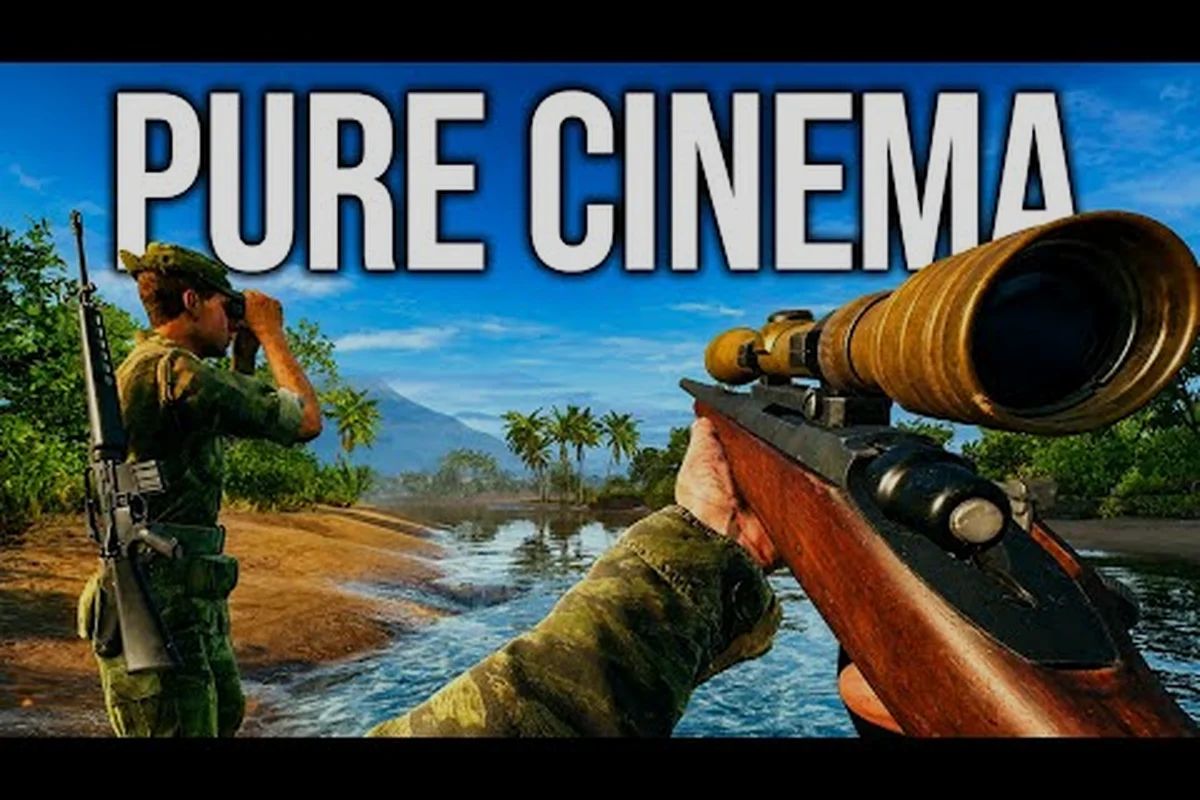
The hell let loose vietnam spotter is the single most influential non-Commander role in a 50v50 match, because this position decides which targets the entire artillery and mortar network engages. While the Sniper handles the rifle work, the Spotter controls the binoculars, the marking system, and the outpost placement that keeps the recon squad alive behind enemy lines. Mastering this role transforms a scattered team into a coordinated strike force, and the difference between a good Spotter and a great one often decides whether your faction holds the central sector or collapses into a defensive retreat.
The Spotter sits inside the Recon squad structure, which operates independently from standard infantry units under the chain of command described on the official Hell Let Loose: Vietnam page. This squad pairs one Spotter with one Sniper, giving the team a two-man unit that can infiltrate deep into enemy territory, call in precision strikes, and dismantle enemy spawn infrastructure. Because the recon squad has no outpost limit restrictions like regular squads, the Spotter becomes the primary forward observer for the entire team, feeding real-time intelligence to the Commander and mortar crews.
Spotter Role Fundamentals and Squad Positioning
The Spotter operates as the eyes of the Commander, and the role demands a completely different skill set than frontline infantry combat. Your primary tools include the binoculars, the marking system, and the recon outpost, each serving a distinct purpose in the information war that decides most Vietnam matches. While the Sniper engages high-value targets, the Spotter stays hidden, observes enemy movement patterns, and relays precise coordinates through the command chat network.
The recon squad structure follows the same 50v50 organization that the Steam page lists as 17 specialised roles across Command, Infantry, Recon, Armour, Helicopter, and Mortar units, though community data on the subreddit suggests the final build may include 19 roles with Helicopter Flight Engineer and Helicopter Medic additions. The Spotter falls under the Recon unit alongside the Sniper, and this two-man team operates with more autonomy than any other squad in the game because their outpost serves as a mobile spawn point that can be placed deep in enemy territory.
Core Spotter Responsibilities
The Spotter juggles four primary responsibilities that shift priority based on the match phase and the enemy team's behavior:
-
Target marking — Using the binoculars to place markers on enemy garrisons, outposts, vehicles, and infantry concentrations that the entire team can see through the tactical map
-
Outpost placement — Establishing the recon spawn point in positions that allow continued observation without exposing the squad to detection
-
Artillery coordination — Communicating precise grid coordinates to mortar crews and the Commander so they can adjust fire onto marked targets
-
Enemy infrastructure dismantling — Locating and destroying enemy garrisons and outposts that serve as spawn anchors for the opposing faction
Each responsibility feeds into the others, because a well-placed outpost enables sustained observation, which produces accurate marks, which leads to effective artillery strikes, which clears the area for further infiltration. The best Spotters think in terms of information cycles rather than individual actions, constantly updating their mental map of enemy positions and adjusting their own placement to maintain coverage.
The role also requires mastery of the fast crawl movement mechanic that the official game page confirms as part of the movement suite alongside swimming and climbing. This prone movement lets the Spotter traverse open ground without being spotted, though it moves slowly enough that route planning becomes essential. You need to identify covered approaches that keep you hidden from common sightlines while still providing a clear view of the target area.
Marking Priority Targets for Artillery and Mortar Support
The marking system is the Spotter's most powerful tool, and understanding what to mark and when to mark it separates average players from exceptional ones. Every mark you place appears on the tactical map for your entire team, but the Commander and mortar crews are the ones who can act on those marks with indirect fire. The hell let loose vietnam spotter role therefore requires constant communication with these support elements, because a mark without a voice callout is just a dot on a map.
The priority order for marking targets follows a clear logic based on how much damage each target type can inflict on your team. Enemy garrisons and outposts rank highest because destroying them eliminates spawn options and forces the enemy team to rebuild, creating a window of vulnerability. Enemy armor ranks second because a single tank can hold an entire sector if left unchecked, and the M48 Patton and other armored vehicles require coordinated fire to destroy. Infantry concentrations rank third because they represent immediate threats to your team's positions, though they are also the most transient targets that move quickly.
Target Priority Table
| Target Type | Priority | Engagement Method | Time Sensitivity |
|---|---|---|---|
| Enemy Garrison | Critical | Mark + Commander artillery | High — rebuilds in minutes |
| Enemy Outpost | Critical | Mark + mortar fire | High — mobile spawn point |
| Enemy Armor | High | Mark + tank destroyer / artillery | Medium — slow movement |
| Infantry Column | Medium | Mark + mortar fire | Low — disperses quickly |
| Enemy Spotter | High | Sniper engagement | Medium — hides after firing |
The artillery coordination aspect of the Spotter role works best when you establish a rhythm with the mortar crews before the match begins. According to community reports from the open beta playtest, the most effective recon squads share a simple code system where the Spotter calls out grid coordinates followed by a distance adjustment, allowing mortar crews to walk fire onto a target without lengthy back-and-forth communication. This system reduces the delay between spotting a target and delivering ordnance, which matters because most high-value targets only remain stationary for 30-60 seconds.
The tank commander relationship also falls under the Spotter's coordination duties, because armor units often need forward observation to engage targets beyond their direct line of sight. When you spot enemy armor, the tank commander can use your mark to position their vehicle and engage from a hull-down position, using the cover that the Vietnam maps provide in abundance. This coordination turns the Spotter into a force multiplier that extends the effective range of every support unit on the team.
Recon Outpost Placement and Infiltration Routes
Outpost placement determines how long your recon squad can maintain observation pressure on a target area, and the hell let loose vietnam spotter role demands careful consideration of every placement decision. A poorly positioned outpost gets discovered within minutes, while a well-hidden one can support hours of sustained reconnaissance. The key factors include concealment from common sightlines, distance from the target area, and escape routes if the position gets compromised.
The Vietnam maps feature dense jungle terrain that provides excellent concealment, but this same vegetation also limits visibility and creates ambush corridors that can trap an unaware Spotter. The Central Highlands and River Delta maps, which community discussions on the subreddit identify as the most challenging for recon work, require different outpost placement strategies because their terrain characteristics differ significantly.
Outpost Placement Scenarios
| Map Type | Best Placement | Avoid | Reasoning |
|---|---|---|---|
| Jungle (Central Highlands) | Dense vegetation pockets | Open ridgelines | Concealment beats visibility |
| River (Delta) | Elevated riverbanks | Flooded fields | Overwatch positions dominate |
| Urban (Thanh Hoa Bridge) | Second-story buildings | Street level | Verticality provides sightlines |
| Airfield (Dak To) | Perimeter treeline | Open runway | Edge positions offer escape routes |
The infiltration route you choose to reach the outpost position matters as much as the placement itself. Community testing during the open beta revealed that the most successful recon squads avoid direct approaches to their target areas, instead using the map edges and natural terrain features to flank around enemy patrols. The swimming mechanic that the official page confirms becomes a valuable infiltration tool on river maps, because most players do not watch the water and the patrol boats that both factions use create predictable traffic patterns that you can avoid.
Once your outpost is established, the Spotter must resist the urge to engage enemies directly. Every shot you take reveals your position and risks the entire recon operation. Instead, the Sniper handles any necessary engagements while you maintain observation and continue feeding intelligence to the team. The recon outpost serves as the squad's lifeline, and protecting it means protecting the team's ability to maintain forward pressure.
Communication Protocols and Command Chat Coordination
The Spotter role lives or dies by communication quality, and the hell let loose vietnam spotter must master both the command chat and the squad chat channels to be effective. Command chat connects you to the Commander and all other Squad Leaders, while squad chat connects you to your Sniper partner. Knowing which channel to use for which information prevents the chaos that plagues uncoordinated teams.
The command chat protocol that experienced players recommend follows a simple structure: call out the target type first, then the grid coordinates, then the urgency level. This format allows the Commander and mortar crews to process the information immediately without asking clarifying questions. For example, a proper callout sounds like "Enemy garrison, grid F-4, high priority, infantry defending" rather than a rambling description of what you see through your binoculars.
Communication Channel Guide
| Information Type | Channel | Example Callout |
|---|---|---|
| Enemy garrison location | Command | "Garrison F-4, two defenders, artillery ready" |
| Enemy armor movement | Command | "Tank moving north through E-3, heading toward F-3" |
| Sniper engagement | Squad | "Target spotted, 200 meters east, engaging" |
| Outpost compromised | Squad + Command | "Outpost hot, relocating to secondary position" |
| Artillery adjustment | Command | "Shift fire 50 meters east, over" |
The logistics officer coordination also falls under the Spotter's communication duties, because supply drops and resource management affect how quickly the team can respond to your intelligence. When you identify a critical target that requires artillery support, the logistics officer needs to ensure the Commander has the munitions available to respond. This creates a support chain where the Spotter identifies targets, the logistics officer maintains resources, and the Commander directs fire.
The pilot coordination becomes relevant on maps where US helicopters provide fire support and supply drops, as the official game page confirms. The Spotter can guide helicopter pilots to landing zones or strafing runs by providing precise coordinates and threat assessments. This coordination requires clear communication about enemy anti-air positions, because a helicopter that flies into a prepared ambush wastes a valuable team asset.
Advanced Spotter Tactics for Competitive Play
The hell let loose vietnam spotter role reveals its full potential when you move beyond basic marking and outpost placement into advanced tactical play. These techniques require practice and coordination but produce outsized results when executed properly. The counter-reconnaissance game becomes a primary focus at higher levels of play, because the enemy team's Spotter poses the same threat to your team that you pose to theirs.
Counter-reconnaissance involves actively hunting the enemy recon squad while maintaining your own observation duties. This creates a duel of positioning where both Spotters try to locate and eliminate the other without revealing their own position. The Sniper partner becomes essential in this engagement, because the Spotter's binoculars can locate the enemy Spotter while the Sniper delivers the killing shot. Community reports from the open beta indicate that winning this duel often decides which team maintains artillery superiority throughout the match.
Advanced Techniques
-
Radio silence discipline — Using squad chat only for essential information when enemy recon is nearby, because voice communication carries and reveals position
-
Decoy outposts — Placing a visible outpost to draw enemy attention while maintaining a hidden secondary position for continued observation
-
Artillery baiting — Marking a position that appears valuable to draw enemy artillery fire, then using the explosion to locate the enemy mortar position
-
Sector rotation — Moving between multiple observation positions on a schedule to prevent the enemy from predicting your location
-
Sniper overwatch — Positioning the Sniper to cover your observation angle while you focus on marking, creating mutual protection
The mortar gunner coordination deserves special attention, because mortar crews can deliver devastating fire on your marks when properly directed. The key to effective mortar coordination is providing adjustment feedback after each round lands. When you see a mortar round impact, you call out the distance and direction adjustment needed, allowing the gunner to walk fire onto the target with precision. This feedback loop turns a slow, inaccurate weapon into a surgical strike tool.
The crewman role also benefits from Spotter coordination, particularly when enemy armor threatens your team's positions. By marking enemy tanks and providing continuous position updates, you enable friendly armor to maneuver into advantageous positions and engage from unexpected angles. The tank guide covers the armor engagement mechanics in detail, but the Spotter's role in enabling those engagements cannot be overstated.
Progression Speed and Loadout Choices for the Spotter
The hell let loose vietnam spotter role unlocks through the progression system that governs all specialized roles in the game, and understanding this path helps you plan your grind efficiently. The role unlock guide covers the full progression system, but the Spotter specifically requires reaching a certain level in the Recon unit before it becomes available. Community data from the open beta suggests the Spotter unlocks at a mid-tier progression point, requiring consistent play in other roles before you can access this position.
The loadout options for the Spotter focus on survival and observation rather than direct combat. Your primary weapon is typically a carbine or submachine gun for self-defense, but the binoculars and smoke grenades are your true tools. The smoke grenades provide emergency concealment when your position gets compromised, allowing you to break contact and relocate to a secondary observation point.
Spotter Loadout Comparison
| Loadout Slot | Option A | Option B | Best For |
|---|---|---|---|
| Primary Weapon | M1 Carbine | MAT-49 | Close-range defense |
| Secondary | M1911 Pistol | Makarov | Emergency backup |
| Equipment 1 | Binoculars | Binoculars | Observation (mandatory) |
| Equipment 2 | Smoke Grenades | Frag Grenades | Concealment vs offense |
| Utility | Watch | Compass | Coordinate tracking |
The squad leader loadout considerations also matter for the Spotter, because the recon squad operates under the same squad structure as infantry units. The Spotter effectively serves as the Squad Leader for the recon team, placing the outpost and directing the Sniper's engagements. This means you need to understand the squad leader loadout options that support extended operations behind enemy lines.
The pilot loadout becomes relevant when coordinating with helicopter support, because US helicopters provide fire support and supply drops that the Spotter can direct. Understanding the helicopter capabilities and limitations helps you provide accurate guidance to pilots, ensuring they deliver their payloads effectively without exposing themselves to unnecessary risk. The coordination between Spotter and pilot creates a vertical envelopment capability that can break enemy defensive lines.
Frequently Asked Questions
What is the primary role of the hell let loose vietnam spotter?
The Spotter serves as the forward observer for the entire team, using binoculars to mark enemy targets for artillery and mortar support while placing the recon outpost that enables sustained operations behind enemy lines. This role prioritizes intelligence gathering and coordination over direct combat, making it the most strategically impactful position in the recon squad.
How do I coordinate with the tank commander as a Spotter?
You provide continuous position updates on enemy armor through command chat, allowing the tank commander to maneuver into advantageous engagement positions. Mark enemy tanks with your binoculars and relay their movement direction, speed, and any defensive positions they hold. This coordination extends the effective range of friendly armor and prevents ambushes.
What is the best outpost placement for the Spotter?
The best outpost placement balances concealment, observation coverage, and escape routes. Dense vegetation on jungle maps, elevated positions on river maps, and second-story buildings in urban areas all provide effective concealment while maintaining sightlines on target areas. Avoid open ground and predictable locations that enemy patrols will check.
How does the Spotter coordinate with mortar gunners?
The Spotter marks targets and provides grid coordinates through command chat, then gives adjustment feedback after each round impacts. This feedback loop allows mortar crews to walk fire onto targets with precision, turning a slow indirect weapon into a surgical strike tool. Clear communication and consistent callouts are essential for effective coordination.
What progression requirements unlock the Spotter role?
The Spotter unlocks through the Recon unit progression path, requiring consistent play in other roles to reach the necessary level. Community data from the open beta suggests the Spotter sits at a mid-tier progression point, and the role unlock guide provides the full breakdown of experience requirements and unlock conditions.